American Science@250: Rethink, Reimagine, and Redesign
Program Areas – Responsible Innovation, Science and Technology Policy, Complex Socio-technical Systems
Overview
Rethinking the Role of Science in Society
As the United States approaches its 250th anniversary, the American scientific enterprise faces an inflection point. Longstanding concerns about the ability of federally funded science to deliver social, economic, and security benefits have intensified since 2020, spurring institutional experimentation alongside unprecedented contraction, politicization, changes to both intramural and extramural research, and regulatory rollback. While recent years have seen the creation of new mission-oriented and translational structures, they have also witnessed declining public trust, weakened science advisory capacity, and growing tensions over the goals, governance, and purpose of publicly-funded science. Responses to this moment have fragmented into three broad currents: efforts to restore the pre-2020 status quo, reforms to accelerate commercialization, and emerging calls for deeper systemic redesign. Yet these efforts largely proceed without sustained historical analysis, deliberative public engagement, or coordination across initiatives.
American Science@ 250: Rethink, Reimagine, and Redesign is a national initiative led by Arizona State University’s Consortium for Science, Policy & Outcomes (CSPO) to address these gaps. The project moves beyond institutional preservation or incremental reform toward a participatory, historically grounded redesign of the U.S. scientific enterprise. Drawing on more than two decades of CSPO scholarship—including participatory technology assessment, anticipatory governance, and public value mapping—the initiative positions science not as an insulated domain requiring protection from society, but as a civic institution that gains legitimacy and effectiveness through structured engagement with public values and democratic priorities.
Project Objectives
The project integrates three core components. First, it conducts a historical and forward-looking assessment of the tensions that have shaped U.S. science policy over the past 250 years, clarifying how past governance choices constrain current options. Second, it engages scientists, stakeholders, and the lay public in informed, deliberative processes to articulate shared values, priorities, and trade-offs for the future of American science. This engagement centers on three diverse focal states—Arizona, West Virginia, and Massachusetts—selected for their distinct scientific, economic, and political contexts. Third, it synthesizes findings from expert consultations, community dialogues, and citizen deliberative forums to generate actionable redesign pathways that complement and inform ongoing reinstate, reform, and redesign efforts nationwide.
By aligning scientific institutions more closely with democratic values and societal needs, American Science@ 250 aims to help place U.S. science and technology policy on a more legitimate, resilient, and publicly accountable footing in the 21st century.
Partners
To ensure the success of our gap-filling and coordination objectives, we will partner with programs, organizations, networks, and initiatives in a structured and systematic manner. We envision three primary categories of partners. Strategic partners are sponsors, advisors, and scholars who will provide overall guidance and direction during the project. Community partners are associations, networks, and local academic and nonprofit organizations that will support the implementation of the project’s community, stakeholder, and public engagement activities, including expert consultations, interviews, workshops, and forums. Collaborative partners are regional and national organizations in the public, private, non-profit, and philanthropic sectors leading one or more of the reinstate, reform, and redesign initiatives to address current challenges and opportunities concerning the U.S. scientific enterprise.
We are thrilled to be working with the Museum of Science, Boston, Arizona Science Center, WVU Extension and WV STeP to host our Massachusetts, Arizona, and West Virginia engagements, respectively.

Funding
This project is funded in part thanks to Arizona State University’s Strategic Innovation Funds.
Meet the Project Team
Principal Investigators
-
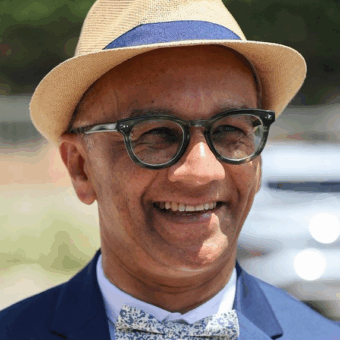
Mahmud Farooque
Associate Director, CSPO
-

Arthur Daemmrich
Director, Consortium for Science, Policy and Outcomes
Additional Team Members