Building Informed and Involved Communities for Responsible Marine Carbon Dioxide Removal – A Workshop Series
Program Areas – Responsible Innovation, Education and Engagement
Advisory Board
Nick Bates
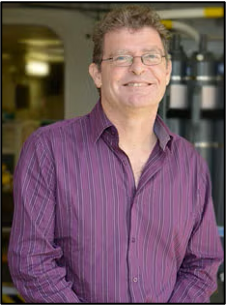 Professor Nicholas (Nick) Bates is a chemical oceanographer and ocean system scientist. He holds a BSc in Geology from King’s College London, an MSc in Earth Sciences from Brock University (Canada), a PhD in Oceanography (1995), and a DPhil in Ocean and Earth Sciences (2013) from the University of Southampton. Nick is a tenured professor at Arizona State University’s School of Ocean Futures and School of Earth and Space Exploration and serves as Senior Scientist and Director of Research at the Bermuda Institute of Ocean Sciences (ASU-BIOS). Formerly a Professor of Ocean Biogeochemistry at the University of Southampton, he now holds a visiting professorship. His research focuses on ocean carbon cycling, acidification, and biogeochemistry, particularly in the North Atlantic, Southern Ocean, and Arctic. His lab is a leading center for ocean carbon and acidification research and oversees long-term ocean studies like the Bermuda Atlantic Time-series Study (BATS) and Hydrostation S.
Ruth Driscoll-Lovejoy
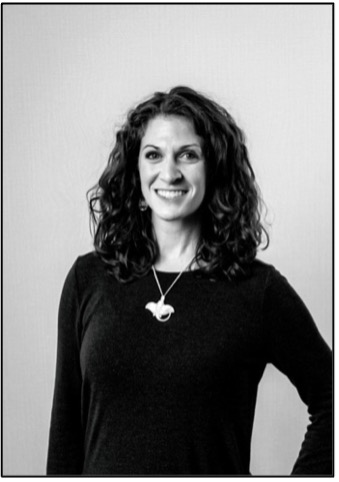 Ruth Driscoll-Lovejoy directs the Ocean Visions Remove Program focused on marine carbon dioxide removal (mCDR). A seasoned ocean conservation advocate, she is dedicated to establishing strong, science-based and socially-informed environmental standards into policy. Before joining Ocean Visions, Ruth led the U.S. Aquaculture Campaign at Environmental Defense Fund to ensure open ocean aquaculture develops responsibly in the United States and produces equitable outcomes. She has also advanced science-based policies and management programs for federal fisheries and U.S. coastal habitat. Before entering the public sector, Ruth helped global multinational corporations achieve and maintain compliance as an environment, health, and safety regulatory consultant. She received a bachelor’s degree in marine biology from Texas A&M University and her master’s degree in environmental law and policy and Juris Doctor from Vermont Law School. Ruth is a member of the Oregon State Bar.
.
Simon Freeman
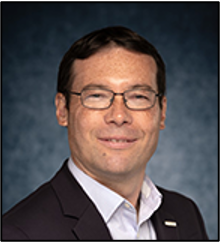 Simon Freeman serves as Chief Scientist of Emerging Technologies at the MITRE Corporation, a 501(C)3 dedicated to serving U.S. government interests in the defense and public sectors. Previously, Dr. Freeman served as a Program Director at the Advanced Research Projects Agency for Energy, or ARPA-E, where he was responsible for the maritime energy technology portfolio, and as a principal investigator at the U.S. Naval Research Laboratory, where he led DARPA-funded initiatives in undersea sensing. Dr. Freeman’s passion is to understand the undersea world in new ways through the development and application of advanced technology and, to use this understanding to create a safer and productive future. His interests include underwater acoustics and sonar signal processing, robotics aquaculture, seafloor critical minerals, and maritime energy systems. Dr. Freeman has a BE/BS conjoint degree from the University of Auckland, New Zealand, and a PhD in oceanography from the Scripps Institution of Oceanography.
Rory Jacobson
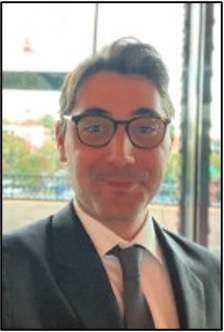 Rory Jacobson is the Head of Policy at Carbon Direct. Previously, he served as the Director of the Carbon Dioxide Removal program within the Office of Fossil Energy and Carbon Management (FECM) at the U.S. Department of Energy (DOE). In previous roles at DOE, Jacobson supported and coordinated FECM’s carbon management programs and projects. Prior to joining DOE, Jacobson was a Deputy Director of Policy at Carbon180, where he managed the federal policy portfolio for engineered carbon removal pathways. He also served as a Science Advisor with Carbon Direct from 2019 to 2022, where he provided policy guidance and performed due diligence on carbon removal projects. He has led carbon management research and analysis in multiple roles, including with the Natural Resources Defense Council and the World Resources Institute. Jacobson received his master’s in environmental management from the Yale School of Forestry, where he was a Kerry Fellow.
Kilaparti (Rama) Ramakrishna
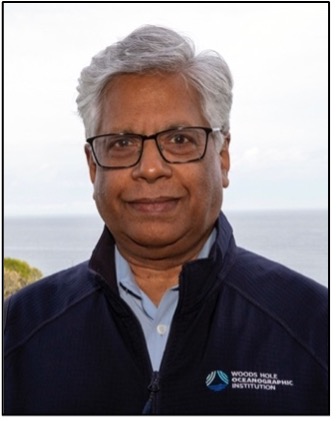 Kilaparti (Rama) Ramakrishna is Director of the Marine Policy Center and Senior Advisor to the President on Ocean and Climate Policy at the Woods Hole Oceanographic Institution. He has held key roles within the United Nations, including Head of Strategic Planning at the Green Climate Fund; Head of the UNESCAP East and North-East Asia Office; and Chief of Cross-Sectoral Environmental Issues at UNEP. He also supported the North-East Asian Subregional Programme for Environmental Cooperation (NEASPEC) and was a lead author of several Intergovernmental Panel on Climate Change (IPCC) reports, the Millennium Ecosystem Assessment, and the Interlinkages Assessment. Before his UN tenure, Dr. Ramakrishna was Director of Science in Public Affairs and Vice President at the Woods Hole Research Center, and taught at institutions including Harvard Law School, the Fletcher School, Boston University, Boston College, Brandeis, and Yale. He is a life member of the U.S. Council on Foreign Relations and serves on advisory boards including the Nippon Foundation-GEBCO Seabed 2030 Project, Back to Blue, Woodwell Climate Research Center, Consensus Building Institute, One Ocean Foundation, and ClientEarth. He holds B.Sc and B.L degrees, as well as master’s and PhD degrees in international law.
Sarah Schumann
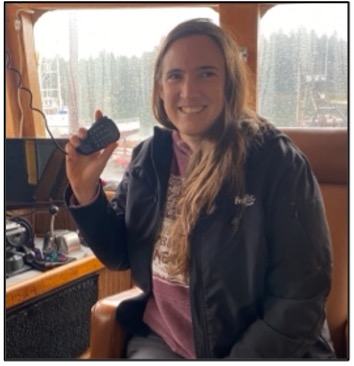 Sarah Schumann fishes commercially in Rhode Island and Alaska and serves as the director of the Fishery Friendly Climate Action Campaign, a grassroots initiative that works across the U.S. fishing community to unlock a groundswell of fishermen-driven climate leadership and foster momentum towards fishery friendly climate solutions. Sarah has been a salmon cannery machinist, a farmers market sales associate, a deckhand on gillnet boats, lobster boats, a seine boat, and an oyster farm; the founder of the nonprofit Eating with the Ecosystem; the author of the books Rhode Island’s Shellfish Heritage and Simmering the Sea: Diversifying Our Cookery to Sustain Our Fisheries, and the creator of Rhode Island’s fisheries interpretive trail. Sarah advised the Secretary of Commerce as a member of the Marine Fisheries Advisory Committee from 2022 to 2025.
Mark Shimamoto
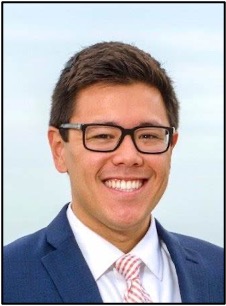 Mark Shimamoto is the Vice President of Global Outreach and Partnerships at the American Geophysical Union (AGU), a position he has held since 2023. In this role, he leads AGU’s efforts to expand its global presence and foster partnerships that advance Earth and space sciences. Shimamoto has been actively involved in AGU’s strategic initiatives, including serving on the Program Committee for the Geoscience and Society Summit. His work emphasizes the importance of science communication and international collaboration in addressing global challenges. Shimamoto’s extensive experience in science outreach and partnership development underscores his commitment to advancing scientific understanding and its application for societal benefit. He holds a master’s in public health (MPH) from The George Washington University and a bachelor’s degree from the University of California, Irvine.
Brad Warren
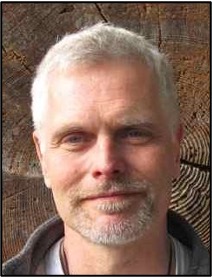 Brad Warren is the President of Global Ocean Health, a Seattle-based nonprofit that champions science-based solutions to ocean acidification, climate change, and marine pollution. A former journalist, Warren brings decades of experience in fisheries reporting to his environmental advocacy, with a focus on effective communication and stakeholder engagement. Under his leadership, Global Ocean Health, originally founded as the National Fisheries Conservation Center, Warren has built strong collaborations with coastal communities, seafood producers, and Native American tribes. He has worked extensively with tribal governments and intertribal organizations to support Indigenous leadership in marine conservation and climate resilience. Warren has served on Washington State’s Panel on Ocean Acidification and regularly speaks at international forums, including the Ocean Visions Summit. Warren also hosts the Changing Waters podcast, which explores ocean health, climate solutions, and the future of coastal communities.
Beth Weed
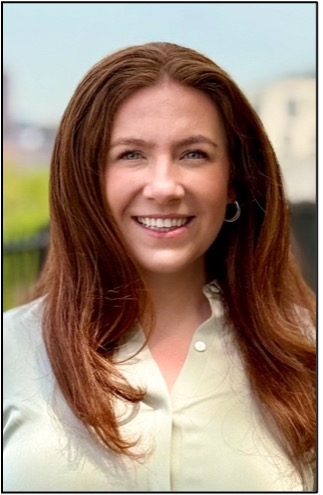 At Isometric, Beth Weed is responsible for policy engagement and for sourcing and onboarding new carbon removal suppliers onto the Isometric platform. Prior to this role, Beth served as the Associate Director of Partnerships and Policy at the Carbon Business Council. Her previous experience also includes work within the US Department of Energy’s Office of Clean Energy Demonstrations, where she served in both project management and stakeholder engagement roles for the Regional Direct Air Capture program. Beth spent six years at WL Gore and Associates as an application engineer for industrial filtration, focused on pollution control technology for heavy-emitting industries. She has an undergraduate degree in Bioengineering and a master’s degree in Materials Science and Engineering, both from Cornell University, and lives in Brooklyn, NY.