Get Involved
Click on the buttons below to discover more…
Rethinking Science, Policy
The goal of this seminar series is to help science policy “grow up, and quickly,” by catalyzing discussions and collaborations between science policy researchers and decision makers about new ideas and approaches for improving the social value of science and technology.
CSPO Conversations
CSPO conversations are occasional dialogues and collective reflections on contemporary issues at the intersections of science, society and policy—from the perils of remaining captive to a “scientific-technological elite” to pragmatic actions in dealing with climate change.
Issues
Issues in Science & Technology is a forum for discussion of public policy related to science, engineering, and medicine. This includes policy for science (how we nurture the health of the research enterprise) and science for policy (how we use knowledge more effectively to achieve social goals), with emphasis on the latter.
Future Tense Event Series
Future Tense is a partnership between the New America Foundation, Arizona State University and Slate magazine to explore emerging technologies and their transformative effects on society and public policy.
As We Now Think
Reflections, commentary and analysis from Consortium for Science, Policy and Outcomes at Arizona State University.
Science Outside the Lab
Science Outside the Lab explores the relationships among science, policy, and societal outcomes in a place where many important decisions about these things are made – Washington, D.C.
Concepts and Tools for a New American Science Policy
Concepts and Tools for a New American Science Policy is a training program in Washington, DC for early career science and technology policy practitioners. The program is built around ten modules held on consecutive Saturdays that explore different aspects of science policy, ranging from strengthening connections between researchers and the public to the role that science plays in confronting and managing uncertainty.
Masters in Science & Technology Policy
ASU offers a one-year master’s degree in science and technology policy, through CSPO. This degree prepares future leaders in science, business, and government to confront many of the 21st century’s most urgent and complex problems at the interface of science, technology and society.
Exposes early career scientists and engineers from Latin America and the Caribbean to key transnational and regional challenges and opportunities related to science, technology, environment and health in the Americas. The program is designed as an immersion experience combining academic lectures, field visits, professional development workshops, networking opportunities and leadership training.
PhD in Human & Social Dimensions of Science & Technology
The PhD in Human and Social Dimensions of Science and Technology at ASU is an ambitious, interdisciplinary initiative to understand what it means for humanity that today’s societies are permeated by science and technology.
User Engagement and Scientific Research
While the concept of user-inspired research—characterized by engagement between the producers and users of scientific information—is increasingly discussed by academics and science managers, it remains largely absent from science policy decision-making processes.
Implementing Climate Pragmatism
As political gridlock, ineffective policies, and unmet emissions targets continue to hamper the global response to climate change, there is a robust and growing demand for a more pragmatic approach to this unprecedented challenge.
A Participatory Technology Assessment of NASA's Asteroid Initiative
Beyond involving citizens in the conduct of everyday science, citizen forums for the purpose of participatory technology assessment engage publics in respectful, multidirectional conversations, and enable them to learn and make recommendations about scientific issues, based on their own questions, interests, knowledge, values and personal experience.
DOD Energy Innovation Atlas
Through a series of interactive figures, the DoD ENERGY INNOVATION ATLAS aims to present in vivid detail the end-to-end nature of the DoD energy innovation system including RDT&E, procurement, and deployment at military installations.
CSPO in DC mailing list
Sign up to receive the latest news and event updates from CSPO in DC.
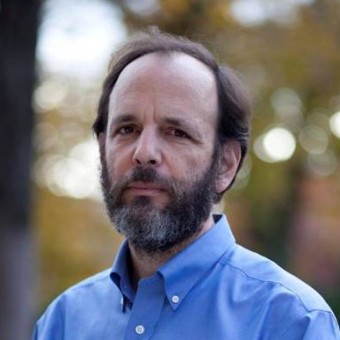
Daniel Sarewitz
Co-Director, CSPO

Mahmud Farooque
Associate Director, DC Office
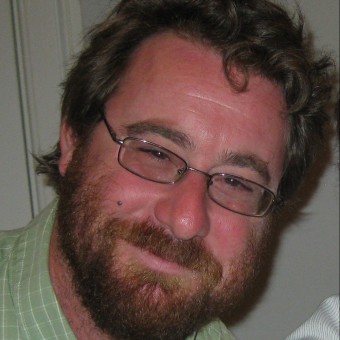
Ira Bennett
Assistant Research Professor

Jason Lloyd
Program Manager
Recent CSPO DC Videos
Recent Publications
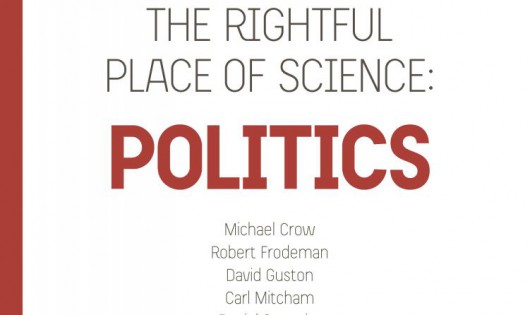
November 2013
The Rightful Place of Science: Politics
The inaugural volume of The Rightful Place of Science book series explores the political dimensions of the scientific enterprise.
Read More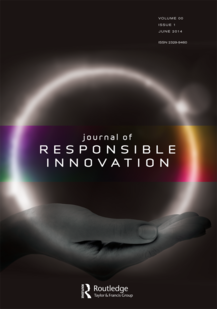
Journal of Responsible Innovation
Scholars and practitioners in the emerging interdisciplinary field known as “responsible innovation” now have a new place to publish their work. The Journal of Responsible Innovation (JRI) will offer an opportunity to articulate, strengthen and critique perspectives about the role of responsibility in the research and development process.
Read MoreNovember 2013
The Rightful Place of Science: Biofuels
This volume in The Rightful Place of Science series is a thoughtful and authoritative assessment of the current and future state of biofuels.
Read MoreNovember 2014
The Rightful Place of Science: Government & Energy Innovation
Government & Energy Innovation explores a variety of energy technologies and how they were developed, offering insight into complex innovation processes and the role of government.
Read MoreNovember 2014
The Rightful Place of Science: Disasters & Climate Change
This provocative book looks at extreme weather and what role, if any, climate change plays in the mounting costs of these disasters.
Read MoreFebruary 2015
The Rightful Place of Science: Creative Nonfiction
This innovative volume in The Rightful Place of Science series presents expert knowledge about science, technology, and innovation policy in an accessible, story-oriented way, without the use of buzzwords and jargon.
Read More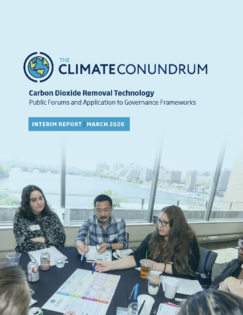
March 2026
The Climate Conundrum: Carbon dioxide removal technology public forums and application to governance framework – Interim report
In 2022, a team of social science, public engagement, and governance scholars in the United States and Canada proposed a comparative research initiative to examine how geographically and demographically diverse public perspectives on CDR can inform evolving governance frameworks. The project was structured around a three-phase participatory technology assessment (pTA) model developed by the Expert and Citizen Assessment of Science and Technology (ECAST) network, which integrates expert analysis with deliberative public engagement (Kaplan et al., 2021). The original project scope envisioned six deliberative forums—three in each country, selected to reflect distinct political economies—followed by analysis of how results could be integrated into project-level, as well as national and binational, decision-making. However, anticipated funding for four of the six forums and for the full governance integration phase did not materialize. The research team, therefore, convened two forums—one in the United States and one in Canada—and is presenting the findings as interim and exploratory. This interim report was intended to inform a future research agenda on participatory governance of CDR rather than to serve as direct guidance for current project or policy decisions.
Read More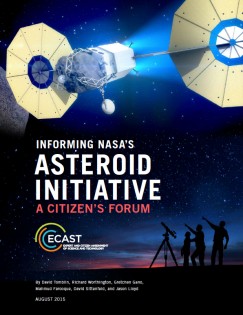
August 2015
Informing NASA’s Asteroid Initiative: A Citizen’s Forum
This new report from ASU’s Consortium for Science, Policy & Outcomes (CSPO) presents the results of an innovative partnership between NASA and a network led by CSPO. By directly engaging the American public in NASA’s plans for future space missions, the project breaks new ground in increasing citizens’ understanding of and engagement in the work of a federal agency.
Read More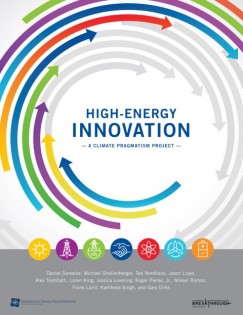
December 2014
High-Energy Innovation – A Climate Pragmatism Project
New energy innovation report highlights central role of emerging economies
The global landscape for clean energy innovation has never been more fertile. A new report coming from a partnership of ASU’s Consortium for Science, Policy, and Outcomes and The Breakthrough Institute states that in order to supply the global public of clean, cheap energy, governments must strengthen international collaborative efforts. High-Energy Innovation is the second of three reports in the Climate Pragmatism project.
Read More