CSPO News In the Press
-

Managing the complexities of power supply, demand
STIR Cities - new NSF-funded project
While innovations are helping to create “smarter” grids that enable utilities to better monitor, manage and adapt to these changing energy flows, innovations also introduce new issues related to citizens’ rights and responsibilities when it comes to consuming and producing power.
-
World Wide Views 2015
Arizona joins voices from around the world to share concerns on climate change
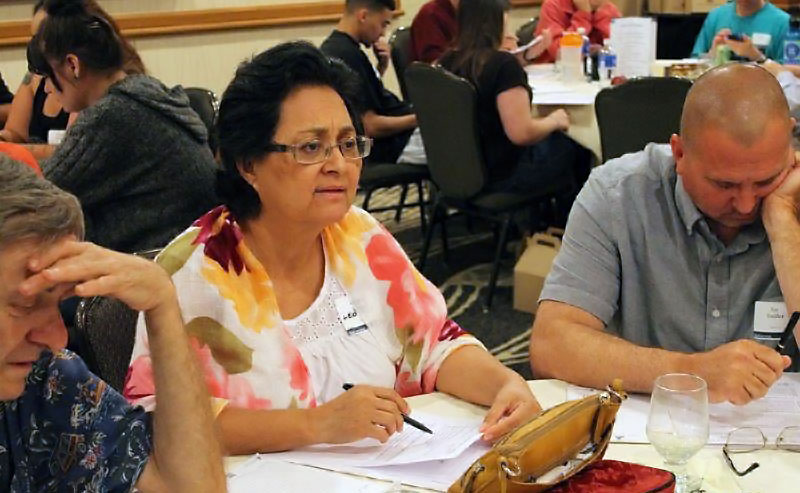
As part of the largest ever citizen deliberation on climate and energy, Arizona State University, led one of 96 daylong debates across the globe that compiled views of approximately 10,000 “ordinary” people.
-

There’s No Place Like Home
Science, information, and politics in the Anthropocene
“…remaking the relationship among humans, our knowledge of the world we inhabit, and the relationship between that knowledge and the choices we make about how to try to make the world better.”
This article is part of Future Tense, a partnership of Slate, New America, and Arizona State University. On Thursday, Jan. 15, Future Tense will hold an event in Washington, D.C., titled “How Will Human Ingenuity Handle a Warming Planet?” For more information and to RSVP, visit the New America website.
-

Science should keep out of partisan politics
Worldview column in Nature by Dan Sarewitz
The Republican urge to cut funding is not necessarily anti-science, and the research community ought not to pick political sides, says Daniel Sarewitz.
-
Where Are Today’s Engineering Heroes?
CSPO Professor of Practice Gregg Zachary’s cover story in IEEE Spectrum launches a new public crusade: Engineering needs more heroes.
-
Exploring ethical reasoning among climate negotiators
Manjana Milkoreit explores how policy-makers and advisors, diplomats, or representatives of non-governmental organizations (NGOs) think about their own and others’ ethical obligations in climate change negotiation.
-
Social Planning for Energy Transitions
Clark A. Miller and Jennifer Richter published an article in Current Sustainable/Renewable Energy Reports on the social dimensions of energy policy development.
-
Creating a taxonomic tool for technocracy and applying it to Silicon Valley
Jathan Sadowski has co-authored an article in Technology in Society to advance theoretical understanding of the nature and scope of technocracy.
-
Electric Utility Spiral
E. Graffy
Elisa Graffy, Professor of Practice at CSPO and Co-Director of Energy Policy, Law and Governance for ASU LightWorks, has a new article in the Energy Law Journal, which is available by open access at the journal website.