Science needs democratic accountability, not political vetoes
In 2004, David Guston wrote an essay in Issues in Science and Technology with a title that still feels bracing: “Forget Politicizing Science. Let’s Democratize Science!”
His point was not that science should be settled by popular vote. Rather, it was that public science is already political because it is funded, organized, justified, and used through public institutions. The real question is not whether politics enters science. It always does. The real question is: through what institutions, with what transparency, and with whose participation?
That question is newly urgent.
On May 29, the Office of Management and Budget published a proposed government-wide rule revising federal financial assistance regulations. Among other things, the rule would require senior political appointees to conduct pre-issuance reviews of discretionary awards and assess whether proposed awards align with agency priorities, the national interest, presidential priorities, and “Gold Standard Science.” Peer review could continue, but the proposal makes clear that peer-review recommendations would remain advisory rather than binding.
The administration has perhaps identified a real problem, but its proposed solution will definitely make it worse.

The real problem is not that politics has suddenly invaded a previously apolitical system. Federal science has never been value-free, despite insistence from some University leaders that it was, prior to the current administration. Congress creates agencies and programs. Administrations set priorities. Agencies translate broad missions into solicitations. Reviewers judge not only scientific merit, but promise, importance, relevance, and impact. The National Science Foundation’s Broader Impacts criterion made this explicit decades ago: publicly funded science should be judged not only by intellectual merit, but also by its relationship to society.
That was not a corruption of science. It was an acknowledgment of democratic responsibility.
The difficulty is that “societal benefit” does not define itself. National security, economic competitiveness, racial equity, regional development, religious liberty, climate action, public health, rural prosperity, disability access, and individual freedom are all public values. Sometimes they reinforce one another. Sometimes they conflict. Scientific expertise alone cannot tell us how to rank them.
This is where science has gotten lost.
The scientific establishment has often treated certain public values as neutral extensions of responsible research administration, while treating competing values as political interference. DEI-related requirements, for example, were often embedded in grantmaking as administrative or professional obligations. Conservative values, when asserted, were more readily recognized as ideological.
That asymmetry helped create the impression that science was not merely producing knowledge, but participating in a political project increasingly associated with one Party. In my earlier essay on RCP8.5, I argued that science gets lost when its political usefulness raises the cost of self-correction. A scientifically useful tool can become politically useful in ways that make correction feel like betrayal.
Something similar can happen institutionally. When a particular political understanding of the public good becomes embedded in scientific agencies, universities, and philanthropy, it can recede into the background as “what responsible science requires.”
I understand why the current administration wants a counterweight. If the existing gatekeepers are perceived as ideologically aligned, a senior political appointee at the final gate can appear to be a corrective measure.
But this is not a democratic correction. It is partisan substitution.
Politics at the gate
A political appointee is not made competent to judge the scientific merit of a virology proposal, climate model, social-science design, or biomedical trial simply because previous scientific institutions made errors. Replacing professional conformity with presidential conformity does not depoliticize science. It makes it more political.
And the architecture will not belong solely to this administration. A future Democratic administration could use the same mechanism to restore its preferred public values, now with a stronger precedent for political review of individual awards. The result would be a federal research system whose priorities and permissible questions could swing every four years.
That is not accountability. It is instability. That is exactly what happened when one set of Executive Orders was canceled and replaced with a completely different set.
The constitutional question is not whether politics belongs in public science, but where different kinds of value judgments legitimately belong.
Scientists should judge scientific merit. Congress should define public purposes. Agencies should administer programs transparently. Courts should determine whether agencies remain within statutory authority. And the public should help deliberate on contested values, social consequences, and trade-offs.
That is the missing democratic architecture.
Science in the post-normal age
Guston’s 2004 essay anticipated much of this. He called for “extended peer review,” in which users and lay citizens could help assess public purposes and social implications while expert reviewers retained responsibility for scientific quality. Operationalizing the arguments put forth by Silvio Funtowicz and Jerome Ravetz a decade earlier, he advocated stronger congressional technology assessment, clearer rules for expert advisory committees, and participatory mechanisms such as citizens’ panels and participatory technology assessment.
Twenty-two years later, that agenda looks less like a reformist wish list and more like an escape hatch from the current democratic backsliding.
A Nature commentary I recently had the honor of co-authoring with colleagues worldwide makes a similar case in more operational terms: put the public at the heart of research and policy by involving citizens in research, making advisory bodies participatory, embracing diverse forms of knowledge, being humble and transparent about evidence and values, advising governments across political lines, and radically scaling the institutional capacity for engagement.
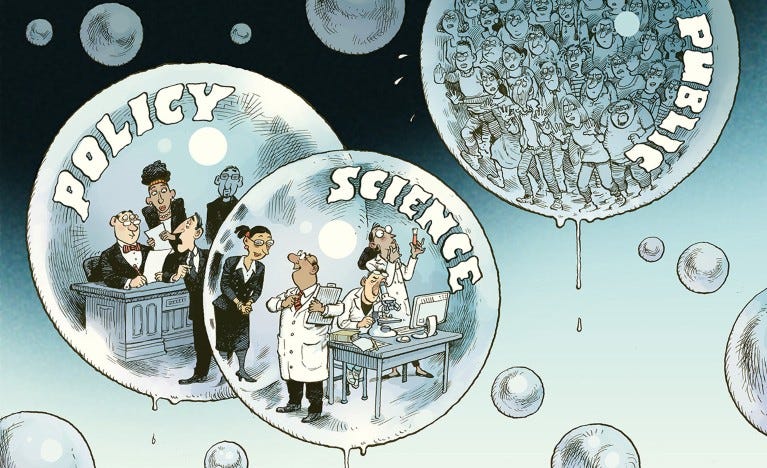
This is not outreach. It is not public relations. It is not asking citizens to bless decisions that have already been made.
It is institutional design.
Public participation should be fit for purpose. Not every research grant requires a citizen panel. A theoretical mathematics project and a community-based environmental health study do not require the same relationship with the public. But the greater the social consequences, distributional effects, ethical conflict, public risk, or dependence on public cooperation, the stronger the case for structured public involvement.
Participation is especially important at the program, portfolio, and major technological direction levels. Citizens can help agencies ask: What should count as a broader impact? Which communities are being overlooked? Which benefits and risks are acceptable? What forms of knowledge are missing? Which uncertainties should be resolved before deployment? How should public investment balance speed, safety, equity, liberty, competitiveness, and legitimacy?
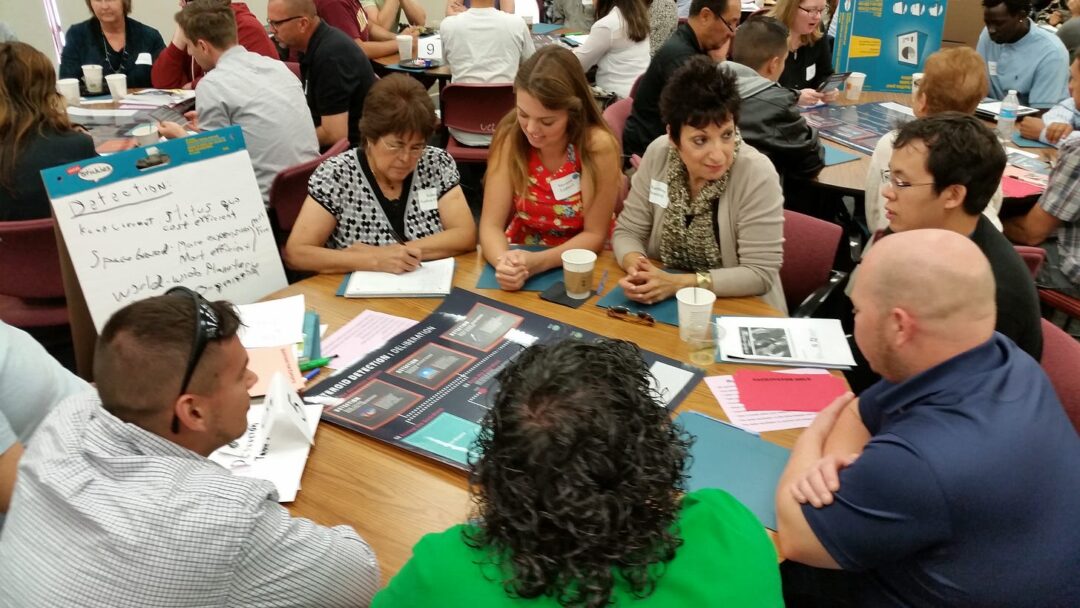
These are not questions that peer review can answer on its own. They are also not questions that should be quietly settled by philanthropy, venture capital, or political appointees.
That is where my recent concern about philanthropy fits. Philanthropy can be enormously useful. It can fund neglected problems, take risks the government cannot, support public engagement, and build capacity. But large-scale science philanthropy can also start to resemble government without elections. It can set priorities, build institutions, create markets, and decide which futures deserve acceleration.
As I argued in “Can Philanthropy Save Public Science?”, the key distinction is whether philanthropy complements democratic capacity, temporarily compensates for government weakness, or substitutes for public authority. Complementary philanthropy helps government listen, learn, and act in the public interest. Substitutive philanthropy builds the machinery for preferred futures before democratic institutions or publics have had a chance to shape the agenda.
That distinction matters for federal science, too.
The answer to weak public institutions is not to let private funders, expert networks, or presidential appointees decide the public interest faster than democracy can. The answer is to rebuild public capacity.
What Congress Can Do
Congress must recover its responsibility, especially in a post-Chevron era. If it wants federal science programs to advance competitiveness, broaden participation, strengthen national security, build regional innovation, support minority-serving institutions, or involve communities, it should say so in operational terms. Vague statutes invite agencies to smuggle in values and administrations to reverse them.
But Congress cannot provide that granularity if it lacks an independent capacity to understand science and technology. This is why Guston’s call to restore the former Congressional Office of Technology Assessment (OTA) still matters. The old OTA gave Congress a way to examine complex technological choices without depending entirely on executive agencies, lobbyists, universities, or interest groups. Today, GAO’s Science, Technology Assessment, and Analytics (STAA) team provides some of that capacity by producing technology assessments, policy options, oversight of federal S&T programs, and science-and-technology analysis for congressional decision-making. However, STAA remains underutilized relative to the scale of the problem. Congress could ask STAA not only for technical assessments but also for participatory technology assessments that bring citizens into questions of public purpose before statutes are written so vaguely as to guide implementation. That would help Congress legislate with more democratic specificity: not by micromanaging science, but by clarifying the public values that federal science programs are meant to serve.

What the Executive Branch Can Do
The executive branch also needs reform. Agencies should make the chain of reasoning visible: statutory purpose, scientific criteria, public-value criteria, expert advice, public input, uncertainties, disagreements, and the reasons for final decisions. When political officials override scientific recommendations, they should state that they are making a policy judgment, not pretend the science changed.
But transparency after the fact is not enough. Agencies also need a way to collect public-value evidence before decisions harden. In a Day One memo with Nicholas Weller and Michelle Sullivan Govani, I argued that the federal government should establish a dedicated participatory technology assessment unit within the Science and Technology Policy Institute, the federally funded research and development center associated with the White House Office of Science and Technology Policy. The goal was to give the executive branch a robust, adaptable, and scalable capacity for just-in-time public engagement on science and technology decisions when neither technical expertise nor existing policy provides clear guidance.
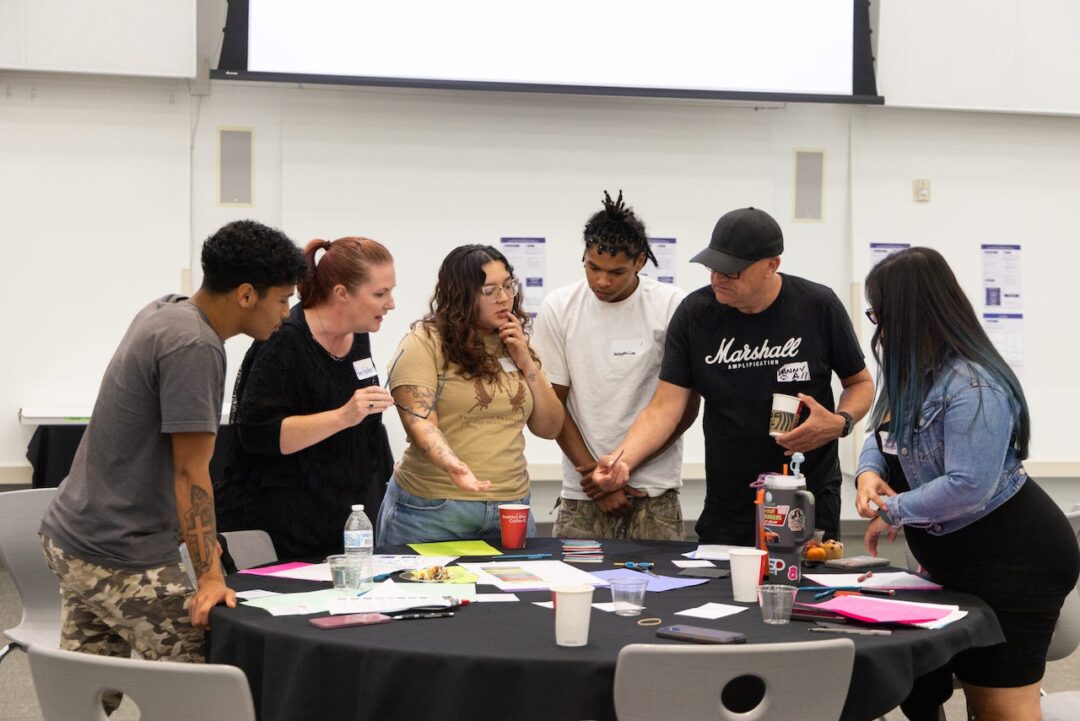
Such a unit would not replace agency expertise. It would help agencies design the right kind of public participation for the problem at hand: small focus groups when the question is narrow; deliberative forums when the issue involves contested futures; stakeholder workshops when implementation depends on affected communities; larger participatory technology assessments when agencies need informed public judgment about risks, benefits, tradeoffs, and plausible alternatives. It would also create institutional memory across agencies, archive public-value evidence, train agency staff, and connect federal decision-makers with universities, science centers, museums, and civic organizations capable of hosting deliberative work. In other words, it would turn public engagement from a one-off experiment into executive-branch capacity.
This matters because existing federal engagement tools are often too thin for the decisions being made. Public-comment periods, town halls, and online consultations can be useful, but they are often dominated by organized interests, highly motivated participants, or mass-comment campaigns. They rarely give ordinary citizens the time, information, and structure needed to deliberate across values and tradeoffs. A federal pTA capacity would not ask the public to make technical determinations. It would ask citizens to help clarify what public purposes should guide technical choices. That is the executive-branch counterpart to congressional technology assessment: Congress needs better capacity to legislate public purposes, and agencies need better capacity to implement them with democratic intelligence.
What Universities Can Do
Universities need to reclaim their public mission as well. This is not only a matter of better communications or warmer town-gown relations. A National Academies consensus study on the land-grant system, on whose committee I served, argued that higher education has, in some cases, drifted away from public values under pressure from research prestige, rankings, grant competition, and commercialization. The report called for reconnecting research, education, extension, and service through collaborative platforms that help universities work with communities, public agencies, civic organizations, industry, and other partners. It recommended building institutional capacity for engagement, recognizing boundary spanners and cultural brokers, rewarding engaged work in tenure and promotion, co-designing some grant solicitations with eligible applicants, and developing public-impact metrics with community partners rather than relying solely on publications, grants, or economic-impact reports.
That is the right direction. Public engagement should be part of research and education, not an appendage to them. Students should learn that knowledge is produced not only for the public, but sometimes with the public. Faculty should not have to choose between serious scholarship and public service. Universities should build the “community engagement backbone” needed to sustain relationships, remove bureaucratic barriers, support collaborative research, and make public impact visible. The land-grant language is especially useful here because it reminds us that the American university was never only a discovery machine. It was also supposed to be a public-serving institution.
What the System Should Do
Funders of all stripes should reinforce this shift. Engagement cannot remain an unfunded side activity performed by researchers who are already stretched thin. Calls for proposals should make clear when public participation is relevant, pay for the labor required, include community partners where appropriate, and evaluate impact in ways that reflect the needs and values of those affected.
And scientists need to be more explicit about the values that shape their advice. Precaution, speed, equity, liberty, innovation, local control, and collective risk reduction are not merely technical judgments. They are public values that should be named, debated, and connected to evidence.
The OMB proposal is right that federal grantmaking needs more public accountability. It is right that peer review is not the same as democracy. It is right that public purposes attached to grants should be authorized and scrutinized rather than accumulated administratively as ideological add-ons.
But the answer to gatekeeping blunders is not to dismantle the entire system and appoint gatekeepers to watch over other gatekeepers. The system is overburdened as is. If something needs a correction at this final stage, it means the system design is far from optimal.
The better answer is greater, visible, and accessible transparency: separate scientific merit from public purpose, expert advice from political judgment, philanthropic initiative from public authority, and public participation from symbolic consultation.
The endless frontier was discovery. The next frontier is participation, as I noted in a previous essay tracing the fundamental tension in the American innovation system.
That does not mean putting science up for a vote. It means building institutions capable of asking the right questions in the right places.
Is the science good? Let scientists lead.
What public purposes should it serve? Let Congress be clear, supported by stronger technology-assessment capacity and public deliberation.
How should agencies act? Make the reasoning visible and build pTA capacity so public values inform decisions before they are made.
What role should universities play? Return them to their public-service mission by making engagement part of research, education, and institutional reward.
Who gets to object, revise, and learn? Design the system so democracy does not arrive only after trust has collapsed.
As Dan Sarewitz warned us a decade ago, “science will be made more reliable and more valuable for society today not by being protected from societal influences but instead by being brought, carefully and appropriately, into a direct, open, and intimate relationship with those influences.”
Wish we had listened.